Mankalir Kundo

We
continued walking until we came across the city's first landmark: a
13th-century mosque. The whole construction is buried beneath, except the
pillar tips and boundary walls that protrude above the ground.


Interestingly,
the remnants of an old temple were discovered right beneath the mosque. This
shows that hundreds of years before the Muslims arrived, saints from various
religions prayed here.
With all
the vast spaces nearby, we took the first few drone images of the surroundings.
Jiyoth Kundo & Parshuram’s Palace
We saw
two of the city's ancient structures side by side on a walk of two minutes to
the north: Jiyoth Kundo and Parshuram's Palace.
Jiyoth
Kundo is a massive water well. Currently, the environment is dry. According to
tradition, the water coming from the well-organized has the power to
give life. It is stated that during the fight between Parshuram and Shah
Sultan, King Parshuram used the water from this well to resuscitate his dead
warriors. Shah Sultan later learned of this and, using a kite, tossed a piece
of beef into the well, destroying the water's life-giving properties. However,
there is no archaeological evidence of this occurrence.
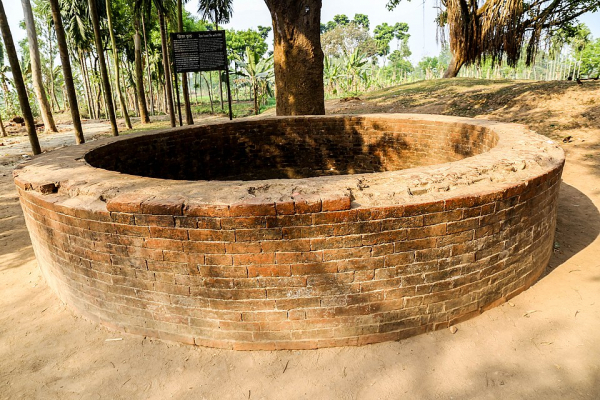
Thediameter of the surface of the well is 3.86 meters and gradually it isdecreased to the bottom.
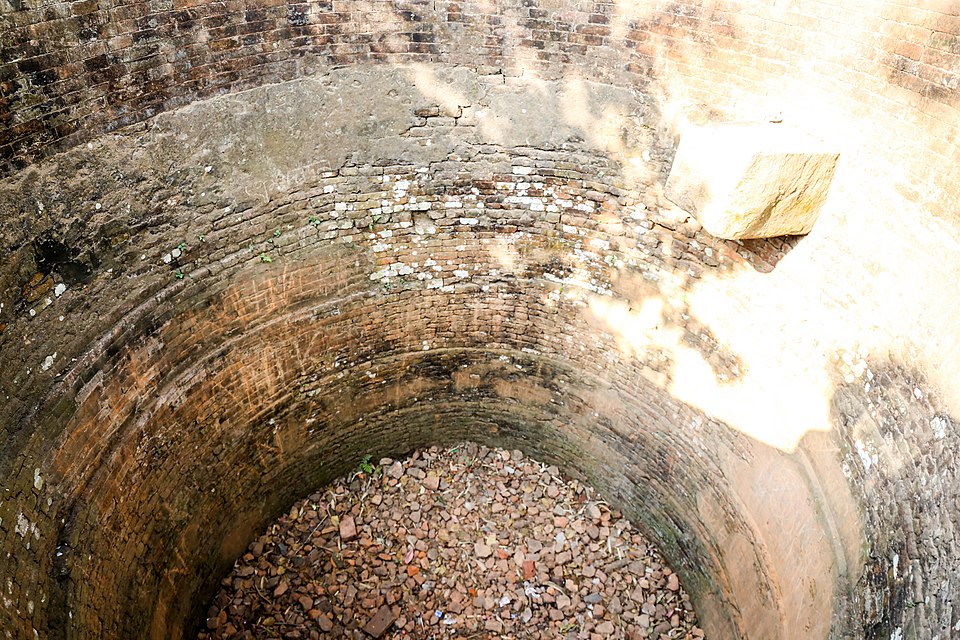

The uppermost stratum is visible now, a palace constructed during the Mughal and British periods (18th century). More excavating revealed traces of 15th and 16th-century antiquities dating back to the Sultani period. Further down, archaeologists discovered structures and coins from the Paal period, dating back to the eighth century
Comments
Post a Comment